
How long do deer antler chews actually last before a dog wears one down?
Deer antler chews last anywhere from two weeks to six months or more, depending on chewing intensity and dog size. Our Whole Elk Antler Chews, built for larger, tougher chewers, hold up longest against aggressive gnawing. Lighter chewers stretch a single antler across several months, giving businesses a durable, long-lasting product that outperforms rawhide or bully sticks in value.
Key Takeaways
-
Deer antler chews last from 2 weeks to 6+ months depending on dog size and chewing intensity.
-
Large elk antlers for dogs weighing 45-65 lbs provide weeks to months of continuous chewing enjoyment.
-
Antler chews do not expire when stored properly, unlike food-based treats that spoil over time.
-
Natural antlers keep dog teeth clean and provide essential nutrients without artificial processing or additives.
How Long Do Deer Antler Chews Actually Last?
Weeks to months — that's the honest range for a deer antler chew lifespan. The exact number depends on a dog's size, chewing style, and the antler type selected. We built our business around that variability, sourcing chews that give owners a genuinely durable option rather than a treat that disappears in a single afternoon.
We founded WAC Antler Chews out of a shared passion for dogs and shed antler hunting. That background shapes how we think about durability: an antler chew earns its price tag by lasting, not by looking impressive on a shelf. Our chews are natural products, designed to support a dog's chewing instincts while contributing to dental health along the way.
Why does chew duration vary so much between dogs?
Chewing style matters as much as antler size. A relentless, powerful chewer wears down an antler far faster than a casual gnawer, even with identical antlers. Dog size plays a role too, since larger jaws generate more force per bite. We consider this variability normal, not a sign of a defective product.
What makes antlers last longer than other chews?
The answer sits inside the antler itself. Naturally shed antlers form a dense antler core, a compact structure that resists the moisture and softness found in rawhide or processed treats. That density is exactly why antlers qualify as long lasting dog chews compared to alternatives that break down in days.
Our antlers come directly from nature, collected without harming animals, which keeps the material pure and free of additives that might speed up wear. Three factors drive how long any given chew survives:
-
Dog size — larger breeds apply more chewing pressure
-
Chewing style — aggressive chewers shorten lifespan considerably
-
Antler type — density and shape affect wear rate
We recommend matching antler choice to these three variables before purchase.
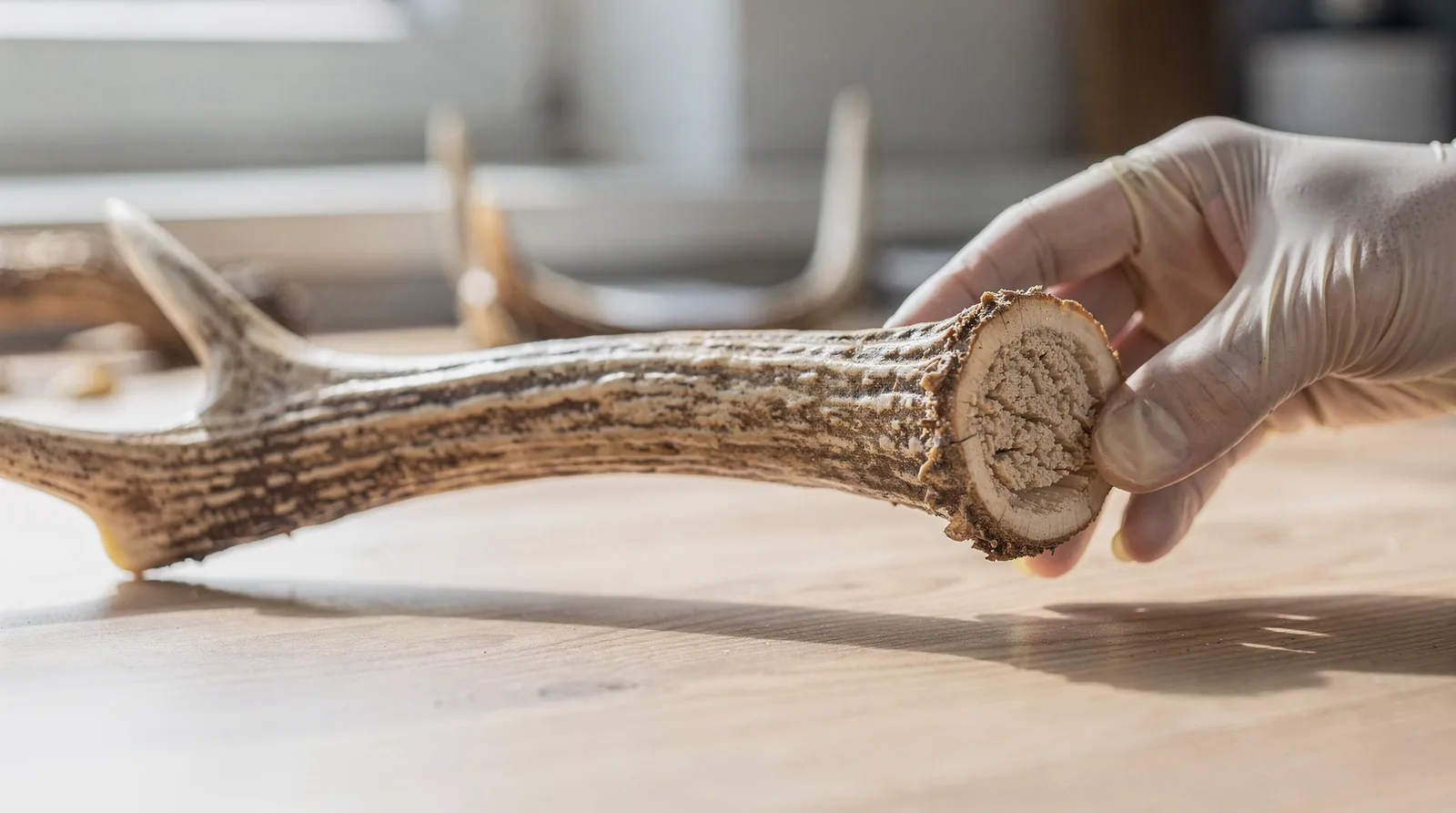
What Makes an Antler's Dense Core Last Longer?
Density inside the antler determines how long a chew survives daily gnawing. A dense antler core resists cracking and splintering far better than hollow or porous alternatives, which is why we build our sourcing model around it. Naturally shed elk, deer, and moose antlers each carry that solid interior structure, and we collect all three types to keep supply steady for the dogs that depend on them.
Sustainability sits at the center of our sourcing decisions. Because shed antlers regrow annually, we never harm the animals we source from. We simply gather what nature already dropped. That renewable cycle means we can commit to responsible collection practices without straining wild herds. It keeps our supply chain both ethical and dependable season after season.
Does antler source affect how long a chew lasts?
Source matters more than most owners assume. Elk, deer, and moose antlers each carry a naturally dense core, and we select from all three to give dogs consistent, long lasting dog chews regardless of size or chew strength.
Why choose naturally shed antlers over synthetic chews?
Synthetic toys break down chemically and often need frequent replacement. Naturally shed antlers, by contrast, offer a structurally sound alternative that supports extended chewing sessions.
Deer antler chew lifespan depends heavily on that internal density we prioritize at every sourcing stage:
-
Elk antlers — dense, durable core suited for aggressive chewers
-
Deer antlers — naturally shed, ethically sourced, renewable supply
-
Moose antlers — solid structure that withstands extended gnawing
We source premium, natural chews specifically because dense, naturally shed antlers outperform synthetic alternatives on both durability and safety.
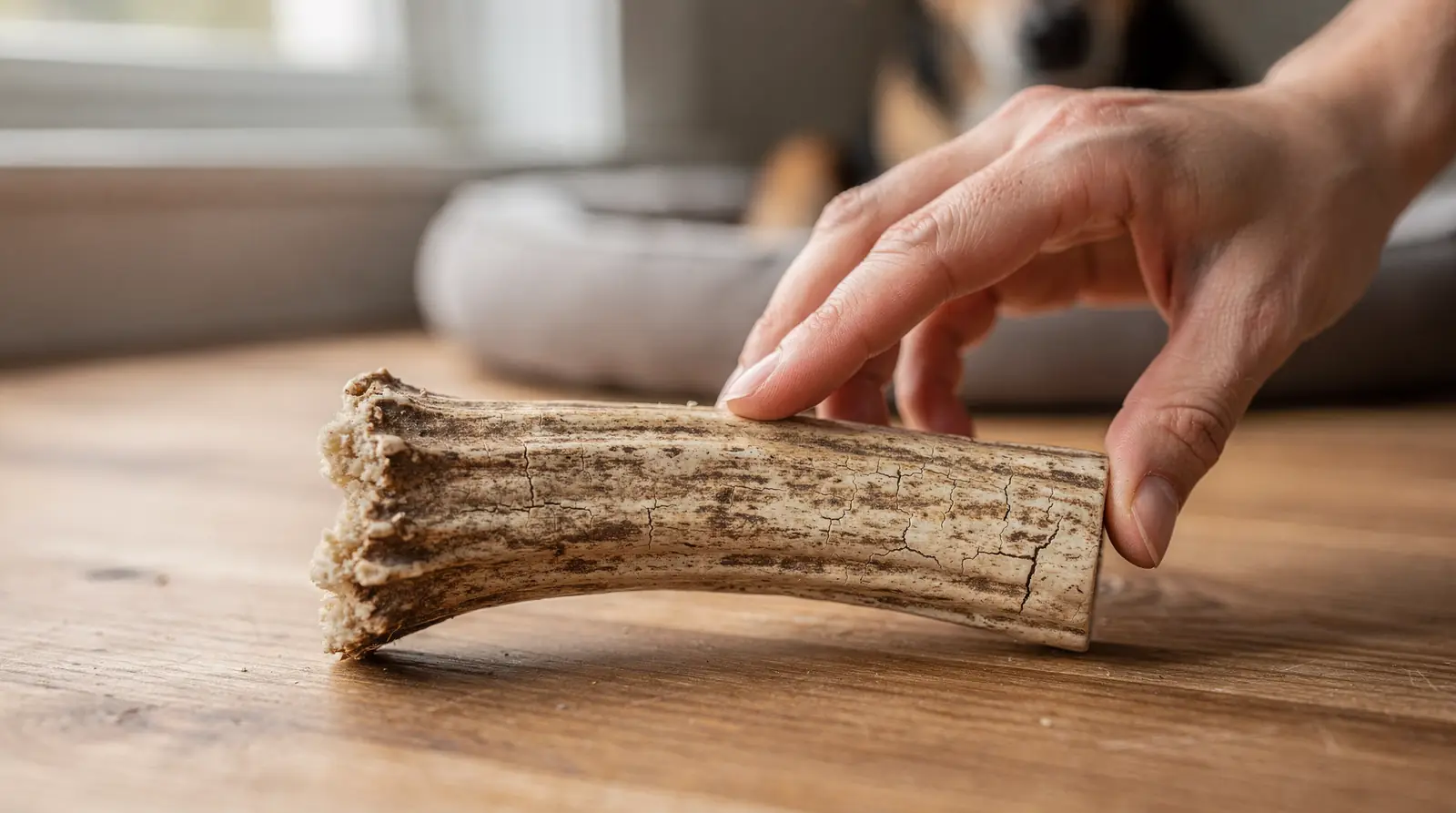
Do Antler Chews Ever Expire or Go Bad?
Antler chews carry no expiration date when we store them correctly. Unlike food-based treats, natural bone products resist spoilage entirely. That distinction shapes how we sell wholesale and how partners can stock inventory without racing a clock.
Naturally shed antlers arrive dense and dry from the start. That density is no accident of processing — it's a structural fact of shed bone. We never add moisture, fats, or preservatives to extend shelf life. The dense antler core already does that job on its own.
Why don't antlers spoil like rawhide or jerky treats?
Rawhide and jerky-style chews contain moisture and fat, which invite bacterial growth over time. Antlers skip that risk entirely. Their dry, mineral-dense structure keeps them stable on a shelf for extended periods, which is exactly why we can promise reliable deer antler chew lifespan to retail partners without worrying about spoilage claims or return complications.
Does storage affect how long an antler chew lasts?
Proper storage matters less for antlers than for perishable chews, but conditions still count. Keeping product dry and away from excess humidity preserves quality and prevents any softening of the surface. For businesses building a catalog of long lasting dog chews, that stability translates directly into lower waste and fewer inventory write-offs.
We view this durability as a competitive advantage. Retailers stocking our antlers aren't managing a perishable category. They're managing a product built to outlast almost anything else on the shelf.
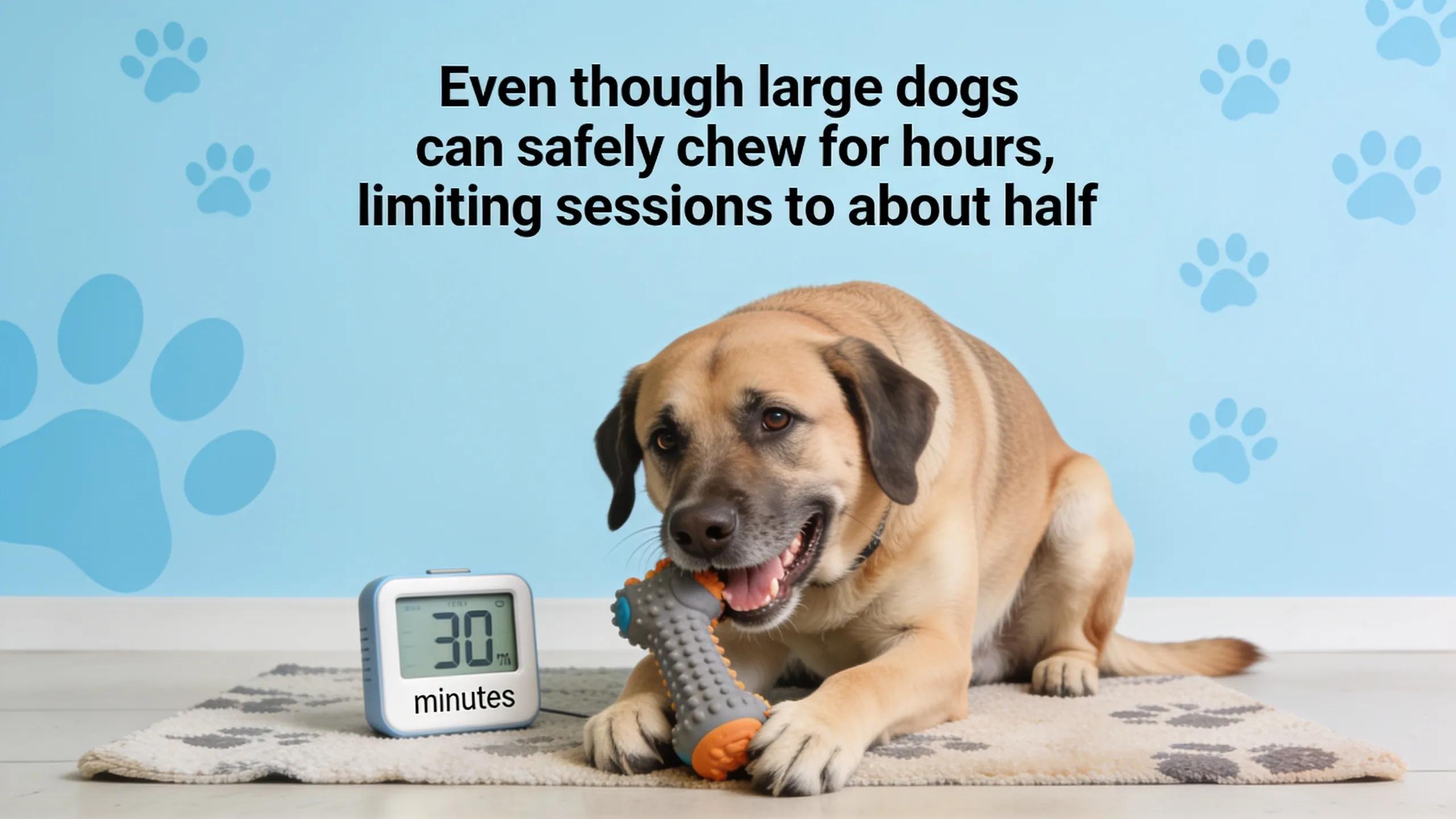
How Long Should Dogs Chew Antlers Each Day?
Thirty minutes marks the safe daily limit we recommend for most dogs, even though large breeds can physically gnaw for hours without tiring. That gap between capability and safety is where a lot of owners get it wrong. We build our products around the half-hour standard, not the marathon-session myth.
Sodium content drives this limit. Antlers naturally contain sodium, and consuming large quantities over extended chewing periods creates real health risks for dogs. Our sourcing from Grantsville, Utah keeps quality consistent, but sodium is a natural property of antler bone itself. No amount of careful selection removes it entirely.
Can large dogs chew antlers longer than small dogs?
Size affects tolerance, not the sodium math. Large dogs handle long lasting dog chews better physically. Our large antler chews exist specifically for pets that need something substantial to work on. Even so, we still recommend capping sessions around thirty minutes regardless of breed size.
What happens if a dog chews too long?
Extended exposure to sodium raises the odds of digestive upset or worse over time. Limiting sessions protects dogs without limiting the benefit. A dense antler core takes weeks to reach anyway, so short daily sessions add up.
Consider this approach:
-
Set a timer for 30 minutes per session
-
Offer the chew once or twice daily, not continuously
-
Store the antler between sessions rather than leaving it out
As a family-owned operation, we design our chews for sustainable, everyday use — not unsupervised, all-day access.
When Should You Replace Your Dog's Antler Chew?
Replacement time arrives when the chew stops doing its job, not on a fixed calendar. Antler chews wear down gradually through use. Like any other toy, they eventually require swapping out for a fresh one. We built WAC Antler Chews as a natural, long lasting dog chews alternative to synthetic toys, which frequently break down quickly and create hazards for pets. That durability buys owners time, but it doesn't make replacement optional forever.
How do I know an antler chew is worn out?
Watch the surface, not the calendar. Once a chew shows sharp edges, splintering, or a flattened, exposed center, retirement is due. A worn chew loses its ability to support healthy chewing instincts. Dental maintenance, the two benefits we built our product line around.
Does a shorter chew still work?
A shrinking chew is not automatically a spent one. What matters is structure. As long as the dense antler core remains solid and free of cracks, dogs can keep gnawing safely.
Owners should run a quick check on a regular basis:
-
Edges – any sharpness or splintering signals replacement time.
-
Core exposure – a hollowed-out or crumbling center means the chew has lost its integrity.
-
Size – a piece small enough to swallow whole should be removed immediately.
-
Odor or residue – unusual smell can indicate the chew has outlived its usefulness.
We source every replacement chew directly from nature, collected without harming animals, so each one delivers the same pure, natural product pet owners trusted the first time around. Consistent sourcing means consistent quality, chew after chew, without shortcuts.