
What makes deer antler chews for dogs safer than rawhide?
Deer antler chews are generally considered safer than rawhide, though they can still pose risks such as tooth fractures due to their hardness. Rawhide poses choking and digestive blockage risks, especially in large chunks. Both require supervision; vets generally recommend antlers
Deer antler chews offer a safer profile than rawhide because they come from naturally shed antlers with no chemical processing, glue, or preservatives, unlike manufactured rawhide strips. Rawhide softens and tears into swallowable chunks, raising choking risk. Our antlers stay rigid, wear down slowly, and deliver natural calcium and phosphorus for dental health.
Key Takeaways
-
Some veterinarians express concerns about antlers, but many recommend them as a safer alternative to rawhide when used appropriately.
-
Rawhide has served as a common dog chew for decades before antler alternatives emerged.
-
Antler chews provide long-lasting occupation and keep teeth clean without leaving furniture mess.
-
Both antlers and rawhide present different safety considerations that dog owners should evaluate carefully.
Why Do Dogs Need Something to Chew?
Chewing is a survival instinct, not a bad habit. Dogs are wired to gnaw, and that drive predates any training we humans attempt to layer on top. Skip the outlet, and destroyed shoes, furniture legs, and baseboards often follow.
We view chewing as a biological need first and a behavior problem second. Regular chewing scrapes plaque from teeth, builds jaw strength, and gives a dog's mind something to focus on besides boredom. Dogs left without an appropriate outlet tend to redirect that energy toward whatever object is nearby. And that's rarely something we want gnawed on.
That's the gap we built our business to fill. Our [deer antler chews](https://www.worldwideantlerchews.com/collections/deer-antler-chews) for dogs are designed to work with that instinct rather than against it, giving dogs a natural way to satisfy the urge while supporting cleaner teeth and healthier gums.
What Happens If Dogs Don't Get Enough Chewing Outlets?
Pent-up chewing drive doesn't disappear — it relocates. Furniture, shoes, and drywall become the target, and dental health suffers as plaque builds unchecked. A steady, appropriate chew object solves both problems at once.
Are All Chew Products Equally Effective at Meeting This Need?
No. Cheap or synthetic chews often fail to hold a dog's interest and offer little dental benefit. We built our product line around the idea that a chew should last, clean teeth as it's used, and stand up to real gnawing pressure. Which is exactly why pet owners looking for a reliable rawhide alternative dog chew turn to naturally shed antlers instead.
Choosing the right chew isn't optional maintenance. It's core to a dog's daily wellbeing.
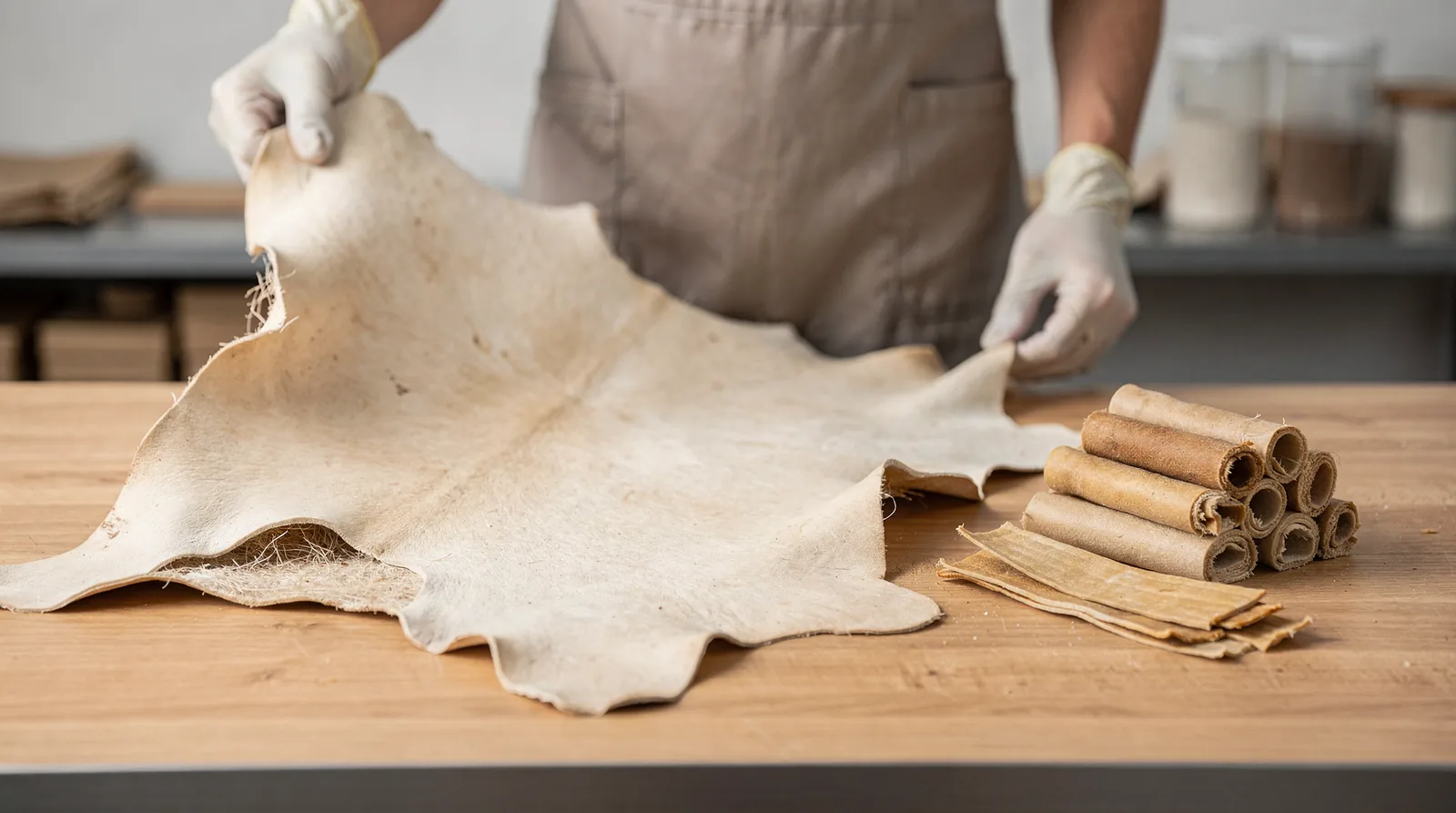
What Exactly Is Rawhide Made From?
Cattle hides supply the raw material for most rawhide chews. Manufacturers strip the inner layer of these hides, then process, press, and shape it into bones, sticks, and knots for the pet market. That inner-hide origin explains a lot about how rawhide behaves in a dog's mouth — and why we built our business around a different material entirely.
We work in deer antler chews for dogs because antlers start as bone-dense structures, not processed hide. Shed naturally each year, they arrive at our warehouse ready for cleaning and cutting, with no chemical processing standing between the animal and the finished chew.
Why does rawhide's manufacturing process matter to dog owners?
Processing changes texture and durability. Hide that gets softened, pressed, and reshaped behaves differently than a chew that keeps its original density and structure. That difference shows up fast once a dog starts working the piece.
For businesses stocking chew products, the sourcing story matters as much as the sourcing itself. Retailers building a rawhide alternative dog chew category need a supplier whose material stays consistent from batch to batch. Inconsistent hide processing creates inconsistent chew life.
What makes antler a sturdier option than processed hide?
Natural antler holds up where synthetic and heavily manufactured products fall short. Synthetic toys frequently break down quickly, creating both a re-purchase cycle and potential hazards for the dog. Antler's density resists that breakdown, giving retailers a product line with fewer returns and repeat customers who trust the chew to last.
That durability, paired with a naturally solid structure, positions antler as the foundation of our splinter-free dog chews lineup. A claim we build our wholesale relationships on.
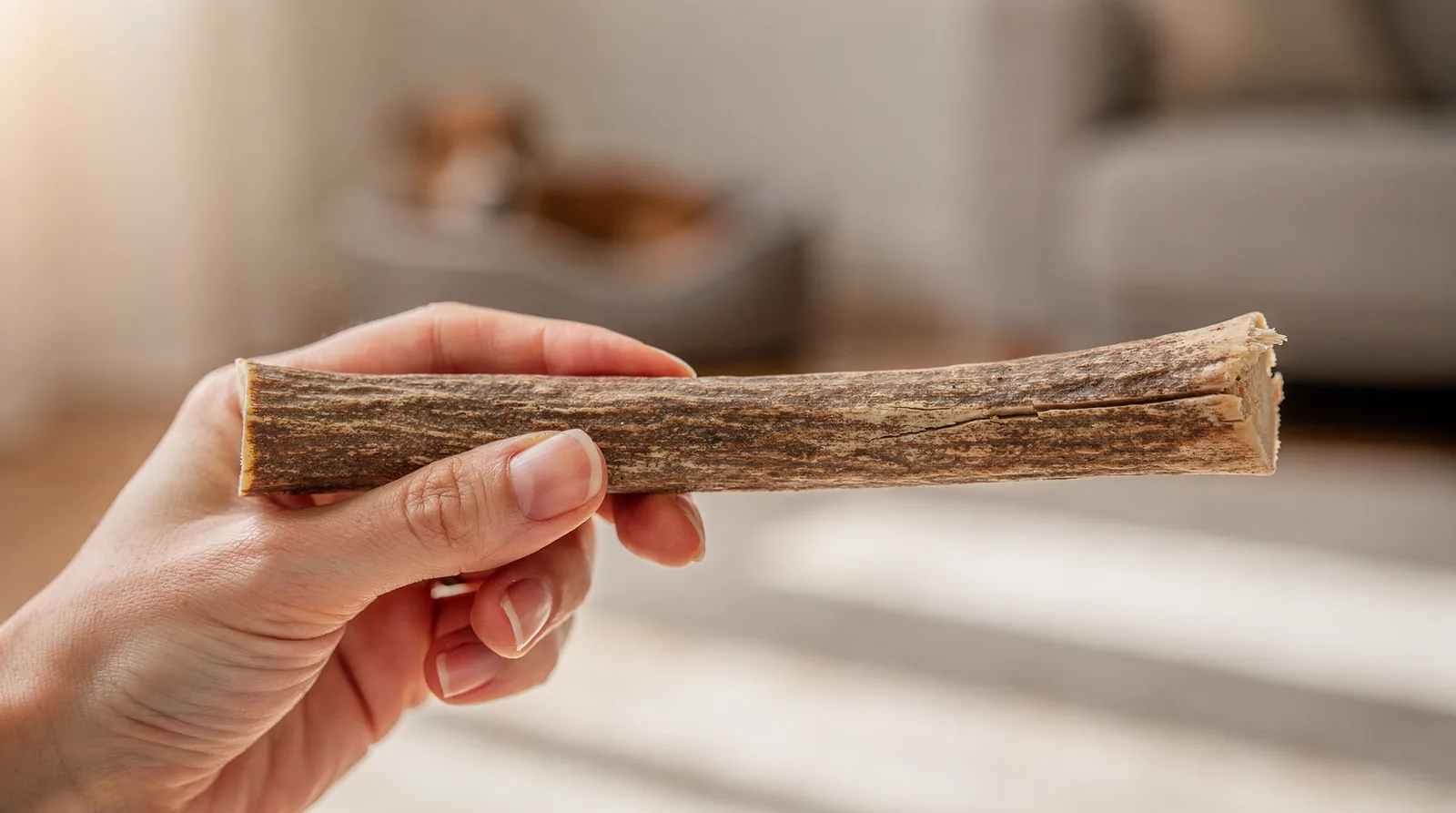
Are Deer Antler Chews Actually Splinter-Free?
Splinter resistance sets deer antler chews for dogs apart from cooked bones and rigid synthetic toys. Bones crack under pressure and leave sharp shards behind. Antlers wear down layer by layer instead, giving dogs a safer chewing experience. That density-driven durability is why so many owners now search for splinter-free dog chews in the first place.
We source every antler directly from nature, without causing harm to the animals that shed them. That sourcing method matters because it keeps our chews pure. Nothing artificial goes into the process, and nothing artificial comes out of it.
Why do antlers hold up better than bones?
Antlers shed naturally each year, growing back denser and more fibrous than bone. That structure resists the kind of splintering vets warn about with cooked or raw bones. Dogs work through the outer layer gradually, exposing marrow rather than jagged fragments.
Are all antler chews free from additives?
We collect antlers only from free-ranging animals in the wild, never from farmed or harmed stock. No preservatives, dyes, or artificial flavoring enter the process at any stage. The result stays exactly what nature produced: bone, mineral, and marrow.
Nutrition backs up the durability story. Our antlers carry natural calcium and phosphorus, minerals tied directly to strong teeth and skeletal health in dogs. Few chew categories combine structural toughness with that kind of mineral density.
For businesses comparing options, the case against traditional rawhide grows clearer here:
|
Factor |
Rawhide |
Antler Chews |
|---|---|---|
|
Splinter risk |
Softens, tears into strands |
Wears gradually, low fragmentation |
|
Additives |
Often processed with chemicals |
Free from additives and preservatives |
|
Mineral content |
Minimal |
Rich in calcium and phosphorus |
Retailers positioning antlers as a genuine rawhide alternative dog chew gain a product built on sourcing integrity, mineral value, and structural safety, three factors that matter to increasingly cautious pet owners.

What Safety Risks Should Owners Still Watch For?
Durability does not equal zero risk. Antlers can pose hazards worth weighing before any purchase. We believe informed buyers make the best partners for our business. Even the toughest deer antler chews for dogs carry considerations that responsible sourcing alone cannot erase.
Some veterinary voices go further. At least one integrative veterinarian has stated flatly that antlers are not a safe chew, pushing back against the popular assumption that "natural" always means "risk-free." We do not dismiss that perspective. Instead, we build our sourcing and grading practices around it, screening for density, size, and splinter resistance before any chew reaches a retail shelf.
Are antlers actually safer than rawhide?
Framed correctly, antlers work well as a rawhide alternative dog chew because they do not break into soft, swallowable strips the way processed hide does. Rawhide can compress into a mass a dog swallows whole, creating a choking or blockage risk. Antler product, by contrast, wears down gradually through grinding rather than tearing.
Do antlers splinter like bone?
Properly selected antler holds up differently than cooked or brittle bone. Bone shatters into sharp fragments; a well-graded, splinter-free dog chews product wears smooth instead. That distinction is exactly why grading and inspection matter at the wholesale level, not just at checkout.
Owners and retail partners should still watch for:
-
Cracked or fractured antler pieces that expose sharp edges
-
Chews worn down to a size small enough to swallow
-
Dogs with aggressive chewing styles that need closer supervision
-
Dental wear on older or sensitive-mouthed dogs
Quality, fairness, and honesty guide how we grade every antler before it ships. That commitment does not eliminate every risk that comes with a hard chew. It does mean retail partners get a consistently screened product. Pet owners get the safe, healthy, long-lasting option they are ultimately shopping for.
Which Chew Should You Choose for Your Dog?
Dog size and chewing strength determine the right antler product. Deer antler chews for dogs suit lighter or moderate chewers. Elk and moose antlers hold up under heavier, more aggressive jaws.
We built our catalog around this variation. Since our founding, born from a passion for dogs and hunting shed antlers, we've focused on matching antler type to real chewing behavior rather than offering a single one-size-fits-all product.
Options by dog type:
-
Small to medium dogs: medium split elk antlers, sized for lighter chewers
-
Large or aggressive chewers: whole jumbo elk antlers, built for tougher jaws
-
Owners seeking variety: naturally shed elk, deer, and moose antlers, sourced with sustainability in mind
Are antlers a good rawhide alternative for dogs?
Yes. As a rawhide alternative dog chew, antlers skip the processing and additives found in traditional rawhide products. Our chews come from naturally shed antlers of deer. Elk, never from manufactured animal byproducts, giving pet parents a cleaner option overall.
Do antlers splinter like bones?
Antlers break down differently than cooked or raw bones. Marketed widely as splinter-free dog chews, antler products wear down gradually instead of cracking into sharp fragments, making mealtime cleanup and supervision simpler for owners.
Conclusion
Choosing between deer antler chews and rawhide comes down to weighing durability, sourcing, and risk. Rawhide's processed, hide-based construction means it can soften into swallowable strips, raising choking and blockage concerns. Deer antler chews, by contrast, come straight from naturally shed antlers with no chemical processing, wearing down gradually while delivering natural calcium and phosphorus for dental health. Neither option is entirely risk-free — cracked pieces, aggressive chewers, and worn-down remnants all warrant supervision — but antlers' density and splinter resistance make them a safer, longer-lasting choice for most dogs. Matching the right antler type to your dog's size and chewing style, whether that's a split elk antler for a moderate chewer or a jumbo elk antler for an aggressive one, is the key to getting the full benefit of a natural, additive-free chew.